幸福魔方
Tibetan medical thangkas draw global spotlight at symposium in Xizang_我的网站

一 | TOKYO -- The operator of the Fukushima Daiichi nuclear power plant said the discharge of the second batch of treated radioactive wastewater into the sea ended as planned on Monday, and International Atomic Energy Agency officials in Japan for their first safety and monitoring mission since the release began two months ago said “no issues” were observed.Fukushima Daiichi started releasing treated and diluted radioactive wastewater into the sea on Aug. 24. The operator, Tokyo Electric Power Company Holdings, said the release of a second, 7,800-ton batch of treated wastewater was completed, with its daily seawater sampling results fully meeting safety standards.A magnitude 9.0 quake on March 11, 2011, triggered a massive tsunami that destroyed the plant’s power supply and cooling systems, causing three reactors to melt and spew large amounts of radiation. Highly contaminated cooling water applied to the damaged reactors has leaked continuously into building basements and mixed with groundwater.The release of treated wastewater is expected to continue for decades. It has been strongly opposed by fishing groups and neighboring countries including South Korea, where hundreds of people have protested. China banned all imports of Japanese seafood the day the release began, badly hurting Japanese seafood producers, processors and exporters. Russia recently joined China in the trade restrictions.“I would say that the first two batches of releases went well. No issues were observed," Lydie Evrard, IAEA deputy director general and head of the department of nuclear safety and security, told a Tokyo news conference. She said she visited Fukushima Daiichi on Friday for a firsthand look.Evrard's visit came on the heels of a marine sampling mission by another IAEA team that included scientists from China, South Korea and Canada. She said all participants in that mission said their activity went well. She did not say whether Chinese scientists acknowledged the safety of the release.She said China has been involved in the IAEA safety task force since the beginning of the review that began two years ago and has participated in corroboration activities. The IAEA is aware of China’s concern and engaged with its authorities, Evrard said.Japanese Prime Minister Fumio Kishida, in his policy speech Monday, renewed his call for China to immediately lift its ban on Japanese seafood imports.During the Oct. 16-23 visit, the IAEA sampling team collected seawater, sediment and fish from near the plant and visited a marine laboratory near Tokyo that makes fish specimens for radiation analysis by institutions in and outside Japan, including the IAEA.During Evrard's visit, IAEA task force and Japanese officials are expected to discuss the safety of the ongoing discharge and their future mission plans, with a report expected by the end of the year. She said the discharge plan would be updated with new findings and data collected over the past two months.The IAEA, based on its two-year review of TEPCO's wastewater release plan, concluded in July that if it is carried out as planned, it will have a negligible impact on the environment, marine life and human health.Japan’s government and TEPCO say the discharge is unavoidable because wastewater storage tanks at the plant will be full next year. They say the water produced by the damaged plant is treated to reduce radioactivity to safe levels, and then diluted with massive amounts of seawater to make it much safer than international standards.TEPCO has said it plans to release 31,200 tons of treated water by the end of March 2024, which would empty only 10 tanks out of 1,000 because of the continued production of wastewater at the plant.。
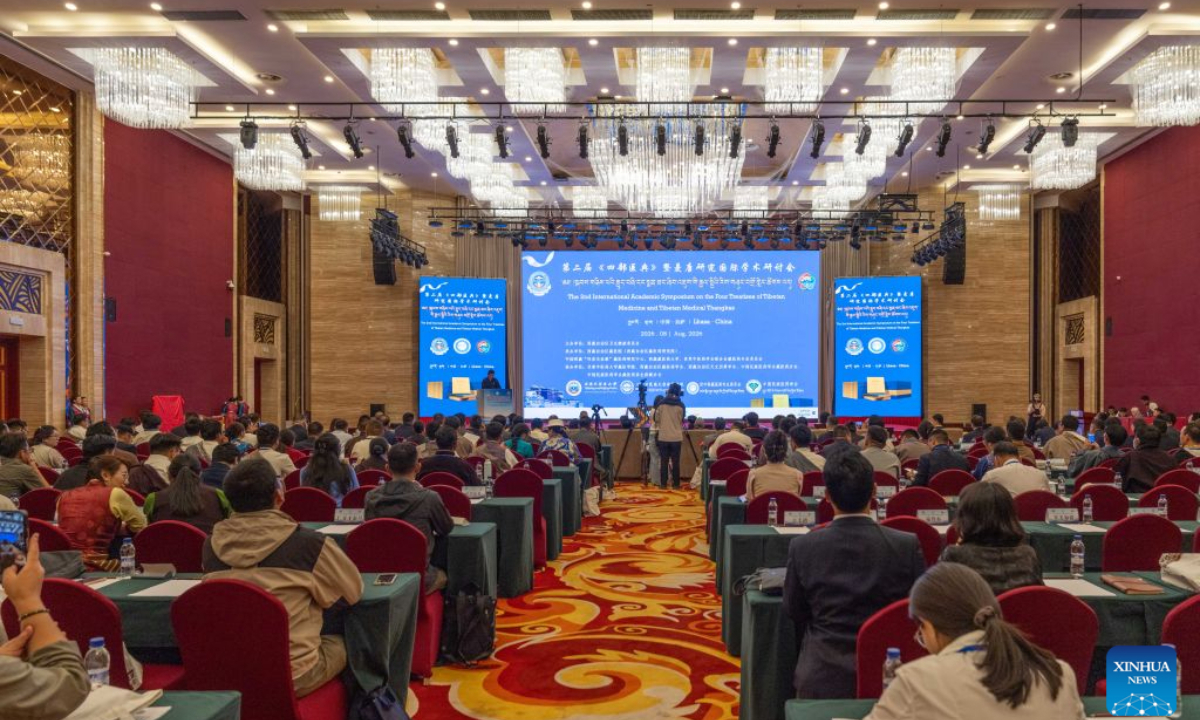
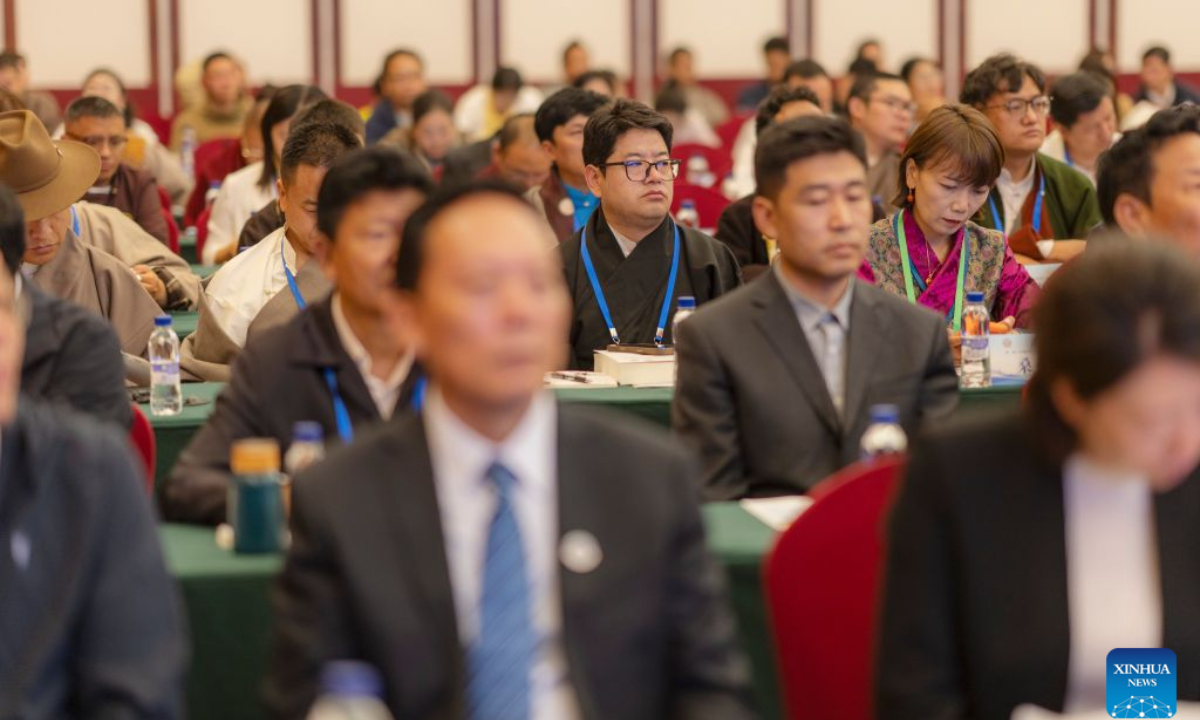
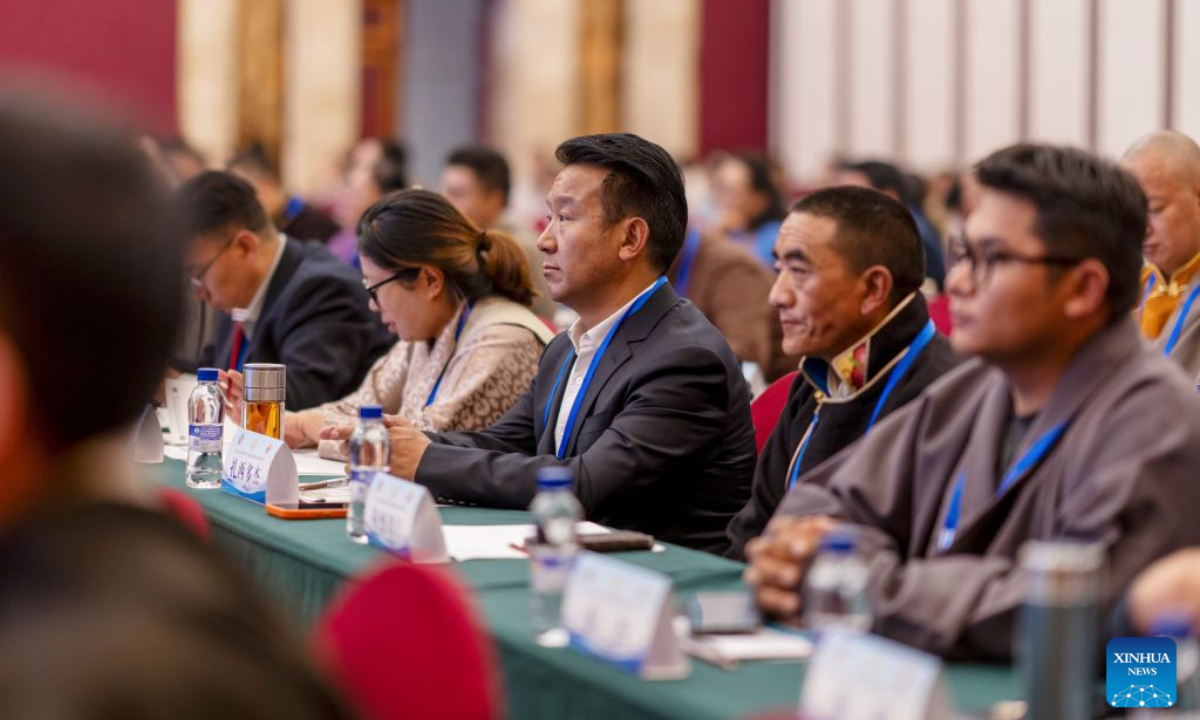
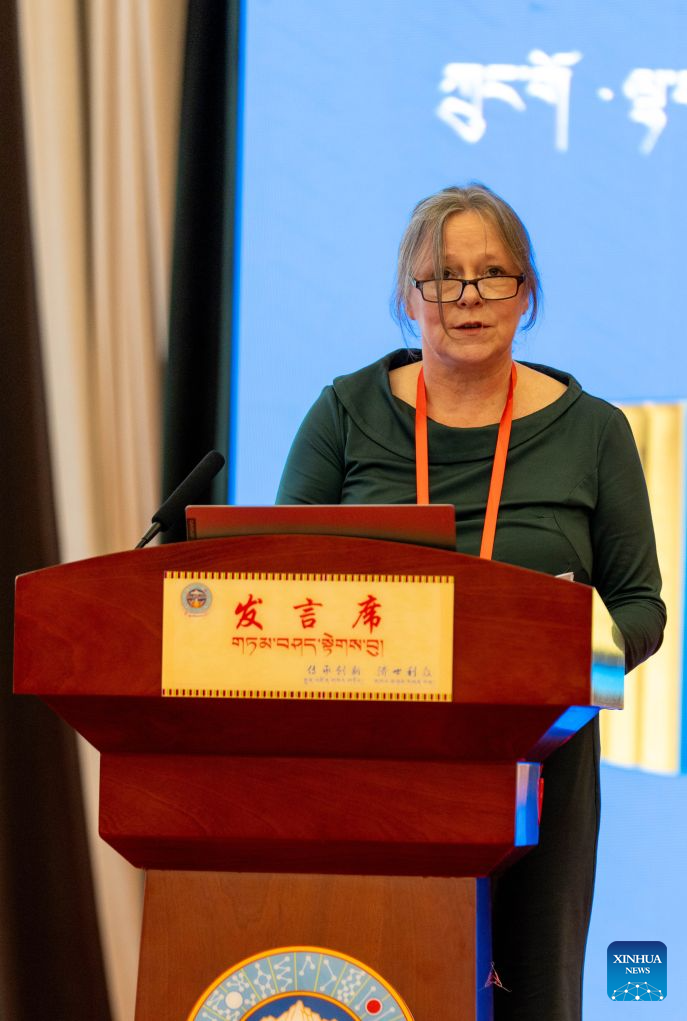
Held in the regional capital Lhasa, the second international academic symposium on "The Four Treatises of Tibetan Medicine" and Tibetan medical thangkas brought together more than 200 experts from China, Britain, Germany, Austria, Mongolia and Nepal.
Discussions centered on the historical evolution of the classic treatises, the iconographic interpretation of Tibetan medical thangkas, and pathways for modern clinical application and international cooperation.
At the symposium, a research center for Tibetan medical thangkas was inaugurated.
Written between the 8th and 12th centuries, "The Four Treatises of Tibetan Medicine" is the most influential foundational work on traditional Tibetan medicine. It was inscribed on the UNESCO Memory of the World Register in 2023.
Based on the work, the 80-scroll Tibetan medical thangkas serve as a visual teaching complement, covering diagnostics, pharmacology, preventive care and medical ethics. The medical thangkas were added to China's national documentary heritage list also in 2023.
Among the participants was Katharina Anna Sabernig, a lecturer from the Medical University of Vienna, Austria, who first encountered Tibetan medical murals at Labrang Monastery in Gansu Province in 1994. She later returned and began delving deeper into the works.
"I saw these murals and I started to get deeper and deeper and to understand all this," Sabernig recalled.
Mary Caroline Wyatt, a scholar with dual British-Greek citizenship, began collaborating on an English translation of texts about Tibetan medical thangkas last September. She noted that complete English versions have long been scarce.
"Our translations target professional readers so that we preserve many specialized, traditional terms," said Wyatt.
The event was hosted by the regional health commission and co-organized by the regional Tibetan medicine hospital and Xizang University of Tibetan Medicine.
Xizang has formulated and implemented a series of policies on promoting Tibetan medicine and encouraging innovation. According to a government white paper released last year, the region has 51 public Tibetan medicine institutions, employing 5,287 professionals and operating 3,260 beds, up from 28 institutions, 2,232 professionals and 1,364 beds in 2012.
In April, China rolled out its first national recommended standard for ethnic-medicine disease classification and codes for Tibetan medicine.
Tsering, president of the regional Tibetan medicine hospital, said inscriptions on the UNESCO Memory of the World Register and China's national documentary heritage list have brought Tibetan medicine to a broader global audience.
"We will make the most of these opportunities to promote academic exchanges and clinical collaboration worldwide," Tsering said.
。
Current article:http://muq5o.tandianxiuzhutiaoshoudiamei.pics/um47el/4t6b.html
Published on:09:02:06


